
Ed Kuepper – The Saints ’73–’78 Interview
The Saints founder Ed Kuepper talks to Mark Kelly about pioneering Australian punk, recording (I’m) Stranded, his reaction to the Ramones and the tensions that brought the original band to an end. He also discusses the new Saints ’73–’78 line-up and their forthcoming UK tour with The Damned.
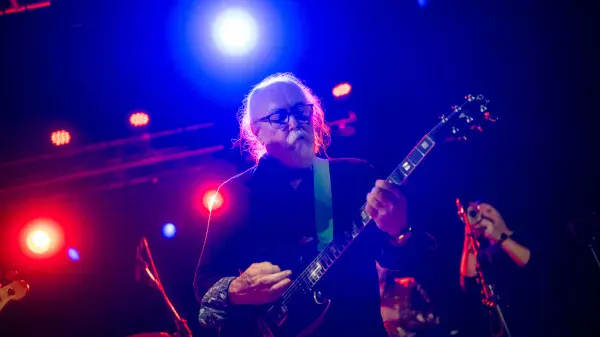
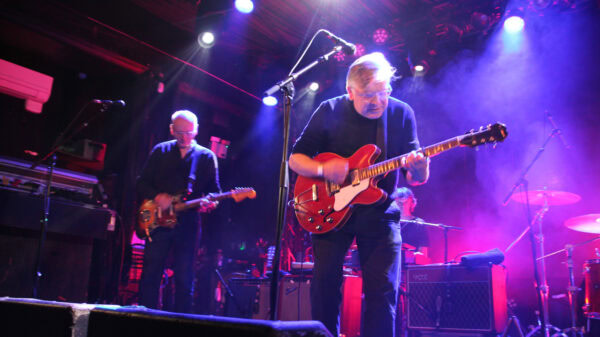
I catch up with Ed Kuepper via Zoom from his home in Australia, ahead of The Saints ’73–’78’s UK tour as special guests of The Damned towards the end of this month. I’d seen the current iteration of The Saints when they played at Camden Electric Ballroom a year ago. Unfortunately, drummer Ivor Hay won’t be joining them this time around. Here’s what Ed had to say.
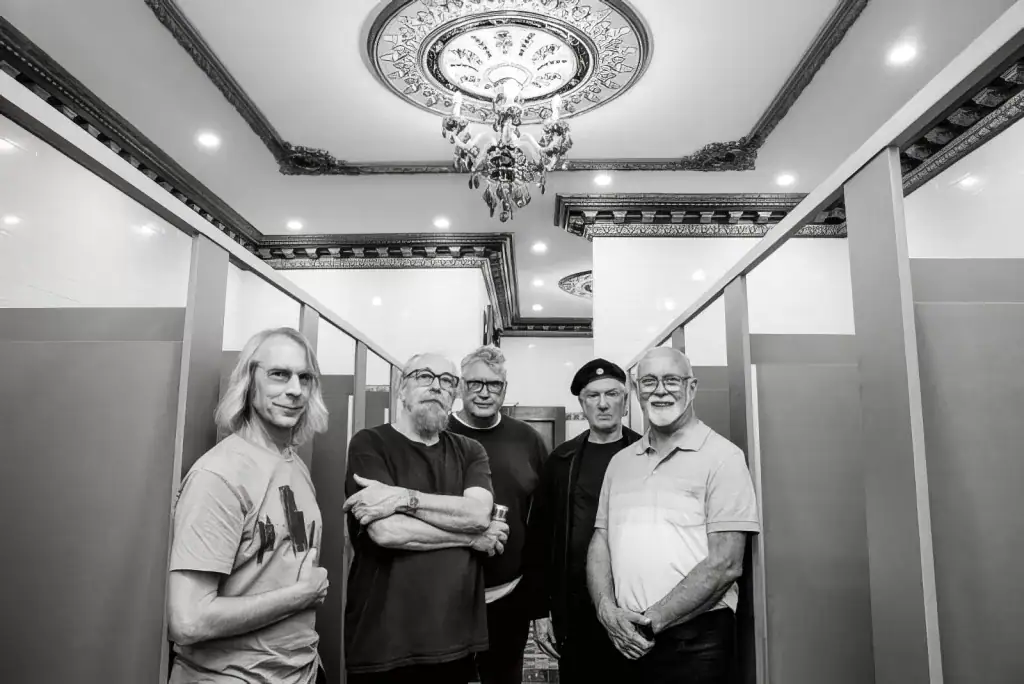
Punk In Focus: You’ve called this current iteration of the band The Saints ’73–’78. Is that an acknowledgement that whilst this isn’t The Saints per se, it’s as close as we’ll now get?
Ed Kuepper: I wanted to continue using the name, and also to put a time period on it, so that people would have a reasonably clear idea of what we would be doing.
PIF: Why have you chosen to celebrate this particular period of the band’s history just now?
EK: The last few years there have been various fiftieth anniversaries. We’ve had a fiftieth every year since 2023 so far. It’s a way to promote the shows, I guess.
PIF: You pretty much pioneered Australian punk, and released your debut single (I’m) Stranded before any of the UK punk bands had released a record. Do you feel that you had a punk attitude from when you started in 1973?
EK: I think we all had an attitude of some kind. We didn’t call it ‘punk attitude’ or anything. I’ll only speak for myself. I just wanted to play the music that we were doing, and to make a record. It was as simple as that. That was the strongest impulse. I was writing a lot of songs; I thought the band had a really unique sound, and Bailey was a great singer. The band was really quite special, and I just wanted to have it recorded.
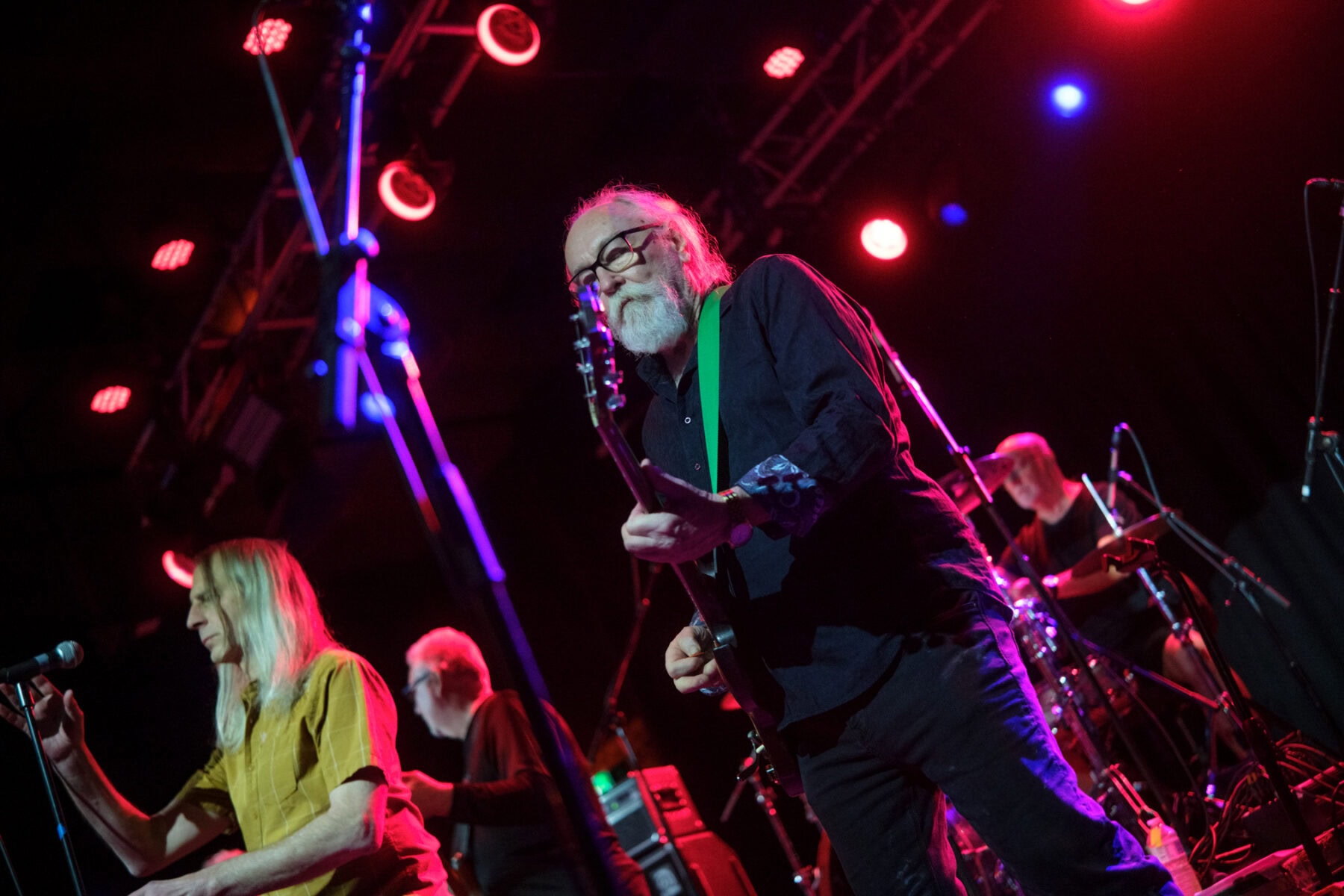
PIF: Were you influenced by the Nuggets-era bands from the 1960s? Were you aware of those at the time?
EK: I didn’t get to hear Nuggets until a friend of mine bought it as a reissue in about 1976. Nuggets wasn’t an influence, but I really liked a lot of the music. There were Australian equivalents of a lot of those bands that are on Nuggets. We had The Missing Links, Tony Worsley and the Blue Jays, all that sort of stuff. Yeah, that was a big influence. Not the only influence, although I really liked something about those bands.
PIF: You and Ivor Hay both left the band in 1978. What connection, if any, do you feel to the music that The Saints made after your departure?
EK: Just to clarify, the band split up in 1978. It wasn’t so much a matter of me leaving. I formed the band. I was the main songwriter, so if I leave the band, then the band is no more. That’s the way that I saw it. I never took any legal action to back that up. I just let it go. There is not much connection to anything after that period of time.
PIF: Were you aware of the Ramones in the early days of your band, and were you influenced by them at all?
EK: The same friend who had bought Nuggets also bought the first Ramones album, and he came round and played it. My first reaction was ‘Oh fuck’. It was in our general territory. Not identical, but I thought, ‘We’re going to have a shit of a job warding off accusations of being Ramones copyists’.
There are actually too many differences for that to be significant to anybody, but that did concern me when I was about nineteen or twenty. The main thing that it actually did for me was it made me stop wearing my leather jacket! I didn’t want to muscle in on their cultivated look.

PIF: Did you feel that your music was any kind of reaction against the music of, say, Pink Floyd and the prog rock that was prevalent at the time?
EK: It’s funny. It was to an extent. I was a fan of early prog rock. I bought records by groups like King Crimson or Nucleus, or obscurities like Gravy Train and all that sort of thing. I had a lot of those records and still like them, but in terms of what I wanted to do musically, it wasn’t that.
By the time we started in 1973, I didn’t like the way that prog started to go after about 1971. Anything that came out around 1971 or earlier I had a chance of liking, and if it’s later, much less so. I still occasionally hear some of that stuff, and if I didn’t like it at the time, I still tend not to like it very much now.
PIF: You self-released (I’m) Stranded. You had your own label. How easy was that to do at the time, in 1976?
EK: I had the idea, which I sort of picked up when I was working in a record warehouse for the Australian sub-company of Pye Records. Once or twice I noticed guys coming in and picking up boxes of singles. I asked what they were and they were usually a truck driver who was also a country singer, and they would get singles pressed up and sell them at gas stations and that sort of thing.
Releasing records was a complete mystery. I bought the records and saw the labels but had no idea how to get songs into that kind of format. Once it became apparent that you could do this on a custom job basis and you didn’t need a record company, then we just did it. It was relatively easy and cheap.
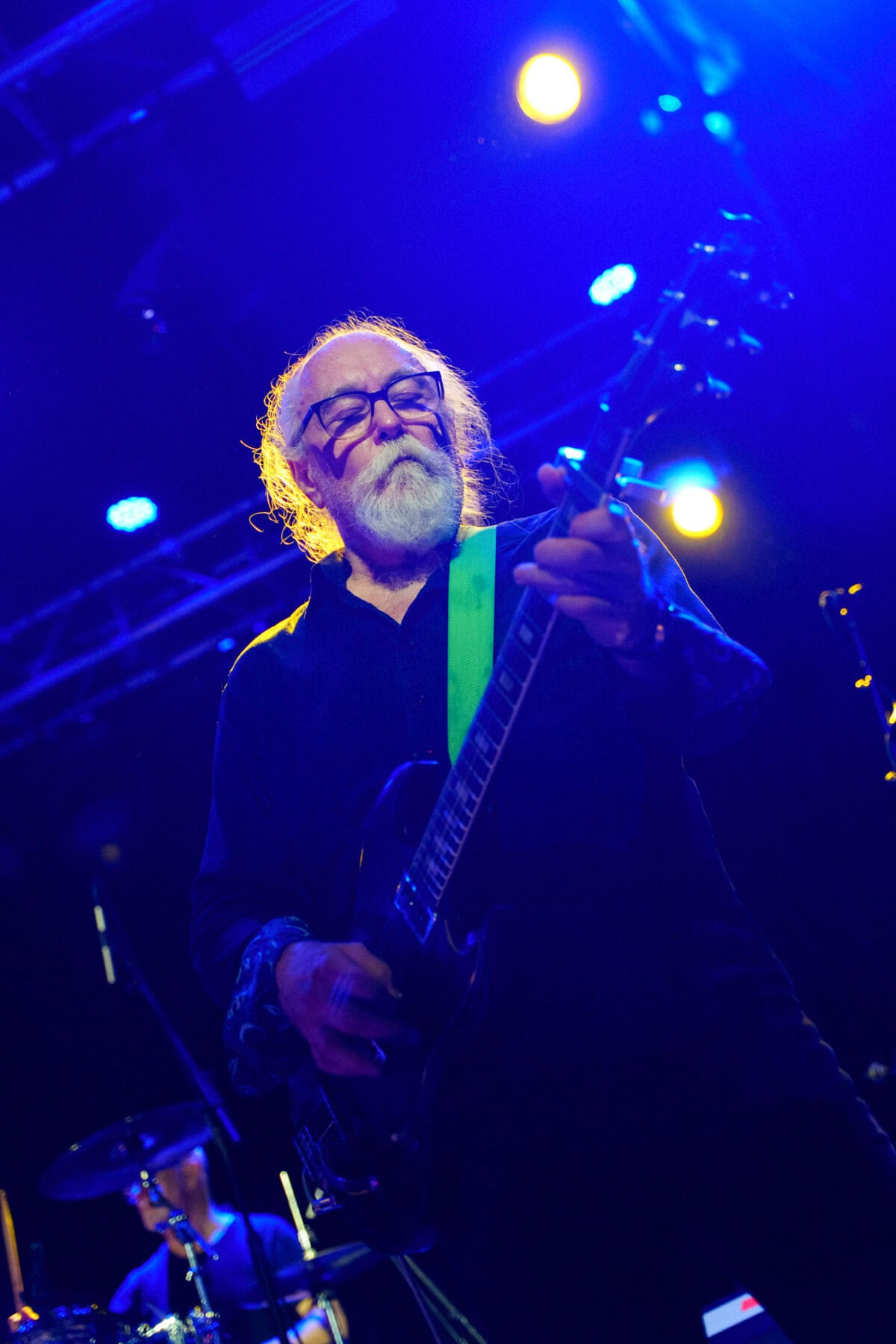
PIF: When you moved over to the UK in 1977, how do you feel that you fitted into the UK punk scene at the time?
EK: I never felt particularly part of the scene. You need to remember that we were moving pretty quickly. We were doing quite a lot of records and touring. The music business is the music business wherever you are in a lot of ways, and I think we were all a little bit disappointed that moving to London wasn’t some massive utopian experience for us.
You meet the same kind of shonky characters in the ‘big’ business that you do in the cover band business. I don’t think we ever made a huge effort to fit in. The main thing was that we had a record contract for three LPs and I was determined to deliver them. That was my focus.
PIF: Did you meet any of the other bands that were around at the time?
EK: Occasionally, yeah. It was a long time ago, and I don’t remember everybody. There were people we were friendly with, and people we were less friendly with.
PIF: You released your second album, Eternally Yours, on the Harvest label. I’m surprised that it was issued on that label.
EK: Me too!
PIF: Did you choose the label or did the label choose you?
EK: I think there was some kind of thing about whether we viewed ourselves as Antipodean punk rockers or not. There was definitely an aspect of us being promoted like that. It was considered that being on the EMI label might be a negative thing, and being on a smaller label would be better.
Often, Harvest were really good. The problem was that people would only work there for a few months, so you’d build up a relationship with someone, and then they’re gone. I can’t give you their names because I’ve forgotten, but there were a couple of really helpful people in the A&R and PR departments. They were fans, you know, which makes a big difference.
When they’re gone, you have the battle of making yourself valid in the eyes of someone new who doesn’t know you. We did nothing towards trying to do that, so eventually the relationship soured a little bit.
There was one really wacky idea that somebody had to have outfits designed for us. Anyone who thought that they could get The Saints into new wave or punk outfits was very misguided. They kind of looked like a more pastel version of Ziggy Stardust meets Generation X! The guy got laughed out of the room! I wish I’d stolen the drawings!!!
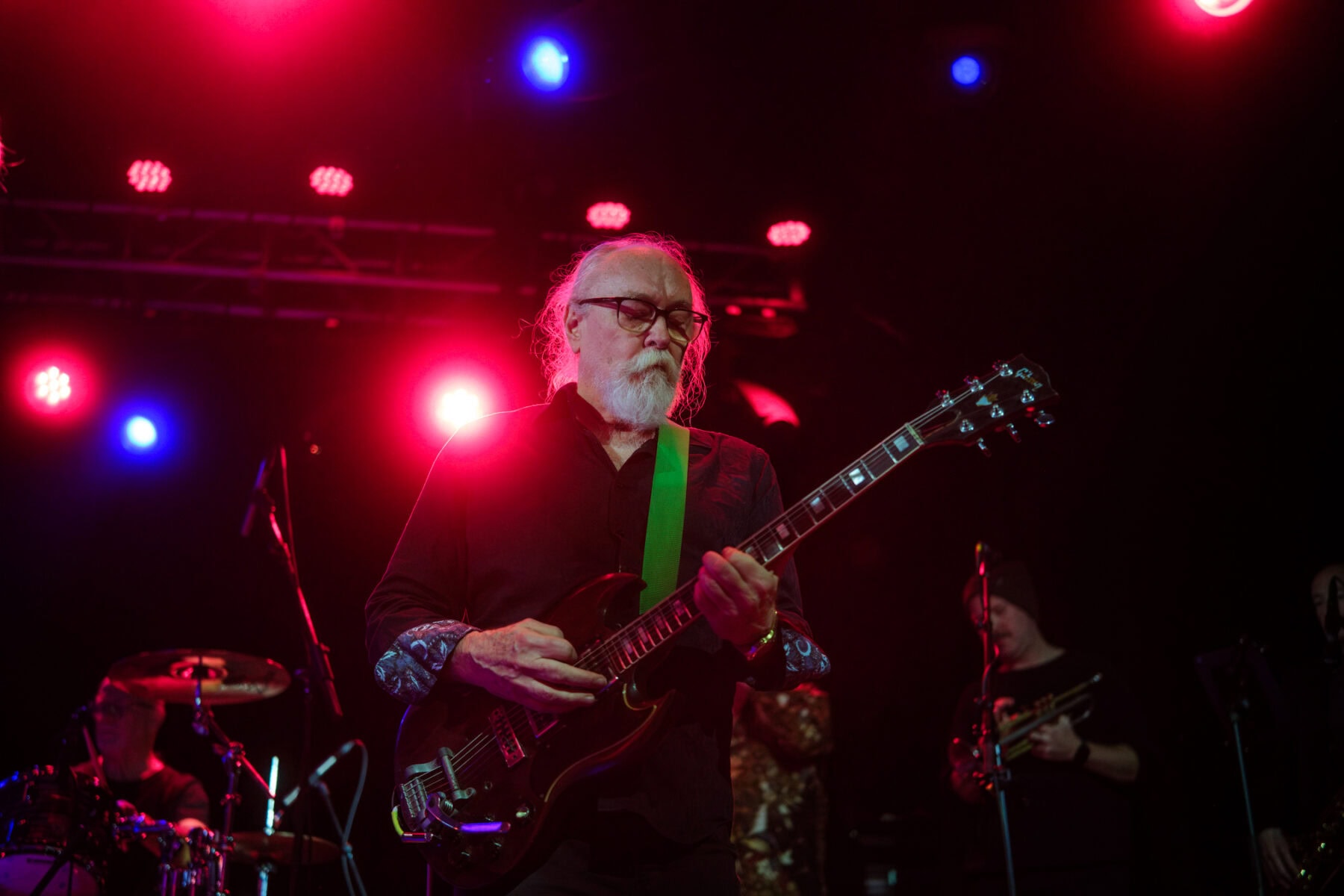
PIF: What led to the band splitting in 1978? You seemed to be doing really well.
EK: We’d released Eternally Yours, which has horns on it, so we realised we were going to need a horn section on tour. I wanted a horn section integrated into the band, and Chris wanted guys dressed in tuxedos who were quite distinct from the band. I thought that looked really fucking goofy, and we argued about it.
It didn’t break the band up, though. I was in some weird state of mind on the Eternally Yours tour. I guess Chris was also. We argued in a way that we hadn’t really argued before, and at the end of the tour he said he was leaving the band, which he did.
We still had an album to record. I had the material for Prehistoric Sounds written, and I wanted to record it. I thought, ‘Let’s get back together for this one thing’, and either we work it out and we continue, or we don’t.
Chris didn’t like the record at all. It took him a long time to warm to Prehistoric Sounds. For people who only loved the first album, the third album is probably difficult to comprehend; I’m not sure.
The split was really down to a number of things. I also put it down to the fact that we were all (apart from Chris) from small country towns, so by the time you hit the ‘big smoke’, you’ve come into contact with a whole bunch of people that you wouldn’t have done otherwise, and that changes you. I found living in London exciting. From a perspective of buying records, it was just incredible.
We decided to part company anyway. After a while, Chris came back to Australia with a new band. He’d been rehearsing this band while we’d been recording Prehistoric Sounds. I didn’t know that at the time; otherwise, I would have been much more outspoken about the use of The Saints’ name. I didn’t know about that until about ten years ago.
People grow up and grow apart. We were best pals until we weren’t.
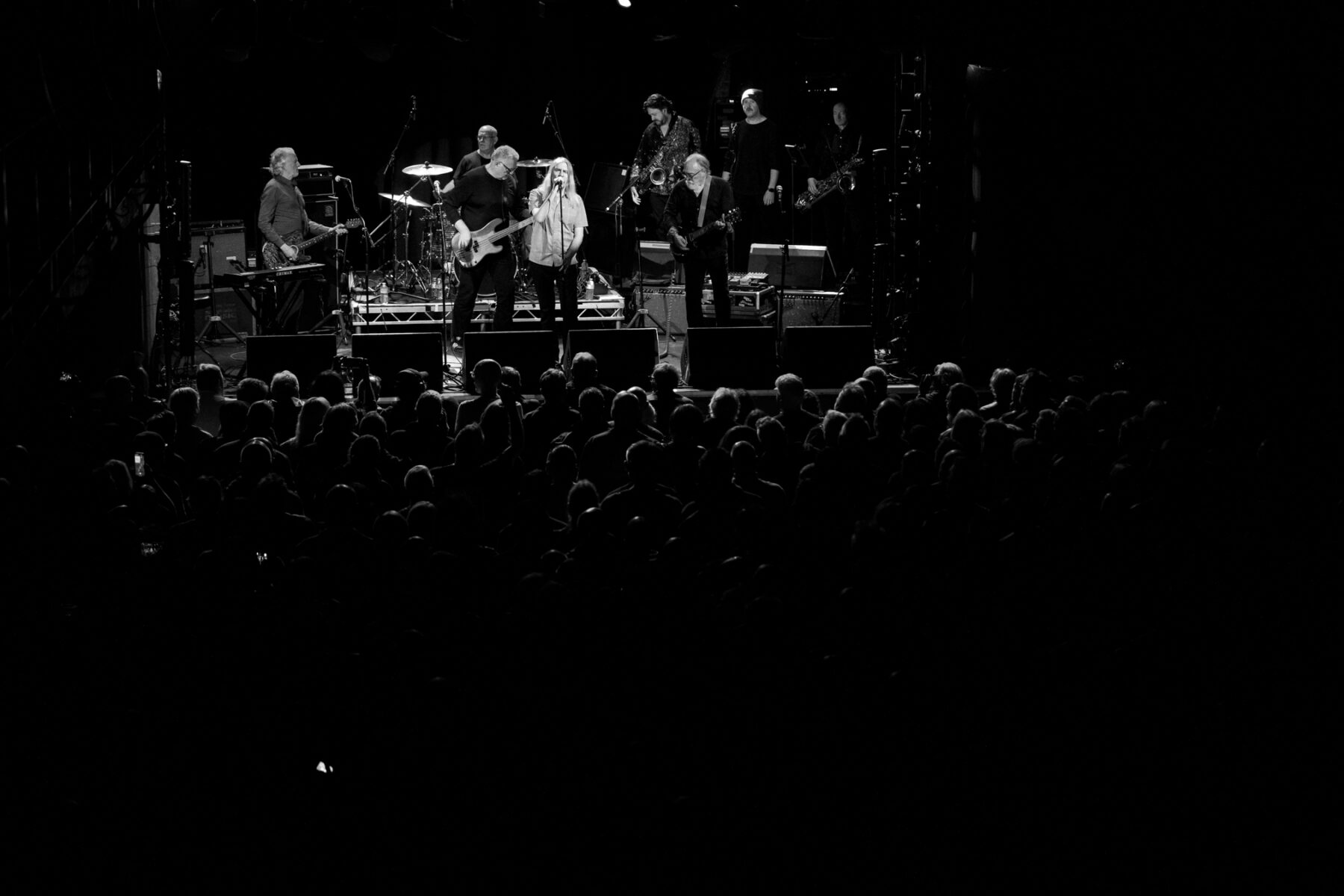
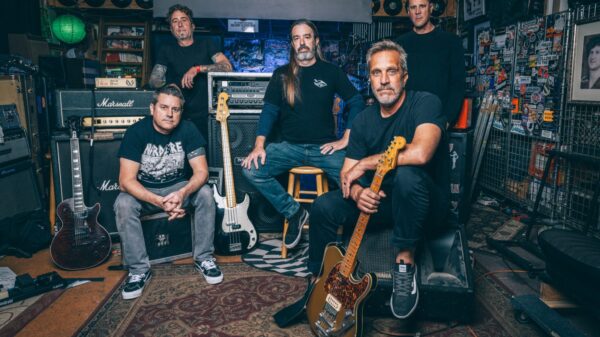
PIF: Your current line-up features some quite stellar musicians: Mick Harvey, Mark Arm and Peter Oxley. How did that come about?
EK: I was just thinking about people who could do the job, basically, and asking if they were interested, which they were. They all obviously have to have some connection to the music. That’s the other stipulation.
There’s Peter Oxley on bass, Jim White on drums on this tour. Ivor can’t make it. We have our horn section, which is an all-British horn section for this tour.
PIF: Mark Arm also played with the MC5/DKT about twenty years ago, and he was pretty good with them.
EK: I saw that. It was one of the things that made me lean very strongly towards Mark Arm. Myself, Bailey and Ivor were all very big MC5 fans. It made it a deeper connection than just 1977 punk or something.
PIF: You’re over in the UK later in the month as special guests of The Damned. Are you looking forward to it?
EK: Yeah! Well, I broke my ankle a couple of months ago and I’m hobbling around the place, but I’m hoping that I can stand up, otherwise I might have to play sitting down. I’m really looking forward to it apart from the travelling.
PIF: Thanks, Ed. Lovely speaking with you. Hope the ankle gets better soon.
The Saints ’73–’78 UK Tour Dates 2026
The Saints ’73–’78 join The Damned as special guests on their Final Damnation 50 UK tour.

UK Tour Dates 2026
Wed 25 Nov – Brighton, Dome
Fri 27 Nov – London, British Airways ARC
Sat 28 Nov – Bristol, Beacon
Mon 30 Nov – Manchester, Academy
Tue 01 Dec – Newcastle, O2 City Hall
Wed 02 Dec – Derby, Vaillant Live
Sat 05 Dec – Birmingham, O2 Academy
Remaining tickets on sale now
- Ticket Link: aegp.uk/the-damned
- Link: https://www.officialdamned.com/
Interview by Mark Kelly